
The execution of industrial water filtration projects depends on economic analysis because it determines their planning requirements. Industrial operations today face mounting pressure to decrease their expenses and cut down their water usage. Plant operations achieve better efficiency when they use circulation filtration systems, which help them reach their sustainability objectives. Facility managers commonly believe that filtration systems exist only to create expenses when, in fact, an efficient filtration system generates profits for the business. This article delivers a practical, numbers-driven perspective tailored specifically for project decision-makers looking to maximize their returns. The article presents a practical framework that enables project decision-makers to achieve maximum financial returns through its numbers-driven approach.
Circulation filtration refers to the continuous removal of suspended solids from water as it loops through industrial systems. Depending on the facility's needs, operators can choose between continuous filtration models, which process water non-stop, and batch filtration models, which process water in discrete volumes.
When designing an industrial water filtration system, several main equipment types dominate the market:
These systems serve various critical functions across multiple industries. Common applications include:
Evaluating the true price of a filtration system requires looking far beyond the initial investment.
CAPEX includes the immediate costs to acquire and set up the equipment. Buyers will notice distinct equipment cost differences based on the chosen filtration type. Additionally, facility managers must budget for installation and system integration costs.
OPEX represents the ongoing costs to keep the system running. Key expenses include the energy consumption required by pumps and controllers , as well as the backwash water loss experienced during cleaning cycles. Routine maintenance and labor costs also form a significant portion of the budget , alongside the eventual need for spare parts and the financial impact of system downtime.
Poor system selection leads to hidden costs that are often ignored during the purchasing phase. These include pipeline clogging and subsequent pressure loss , severe equipment damage caused by poor filtration , and costly production interruptions.
A well-designed circulation water filtration setup significantly extends equipment lifespan. It offers crucial protection for downstream pumps, valves, and heat exchangers. This protection results in a direct reduction in the replacement frequency of expensive facility hardware.
Upgrading your filtration technology can drastically reduce maintenance frequency and associated labor costs. When comparing automatic systems to manual cleaning systems, the labor savings become immediately apparent. Furthermore, modern setups allow for predictable maintenance cycles rather than emergency repairs.
Clean water improves overall system efficiency. It ensures a stable flow rate and consistent pressure throughout the piping network. Consequently, this stability leads to reduced energy consumption in pumping systems.
Effective filtration drives water savings and helps facilities maintain strict environmental compliance. It allows for the efficient recycling and reuse of process water. Ultimately, this leads to lower wastewater discharge costs and a smaller environmental footprint.
Properly evaluating a filtration investment requires specific financial metrics. Decision-makers should track the following:
Consider a practical sample ROI scenario to illustrate these concepts. We compare a standard cooling water system without proper filtration against one equipped with an automatic backwash filter. A cost comparison over a 3–5 year period highlights the financial trajectory. By factoring in reduced maintenance and energy usage, this scenario clearly demonstrates real savings and a positive industrial filtration ROI.
Buyers frequently make common mistakes during ROI evaluation. The most prevalent error is focusing exclusively on the upfront price of the equipment. Another major oversight is ignoring the long-term costs of maintenance and production downtime.
When conducting a comparative economic analysis , weighing a screen filter against a disc filter involves balancing cost versus filtration precision. Buyers must also determine the suitable project scale for each technology.
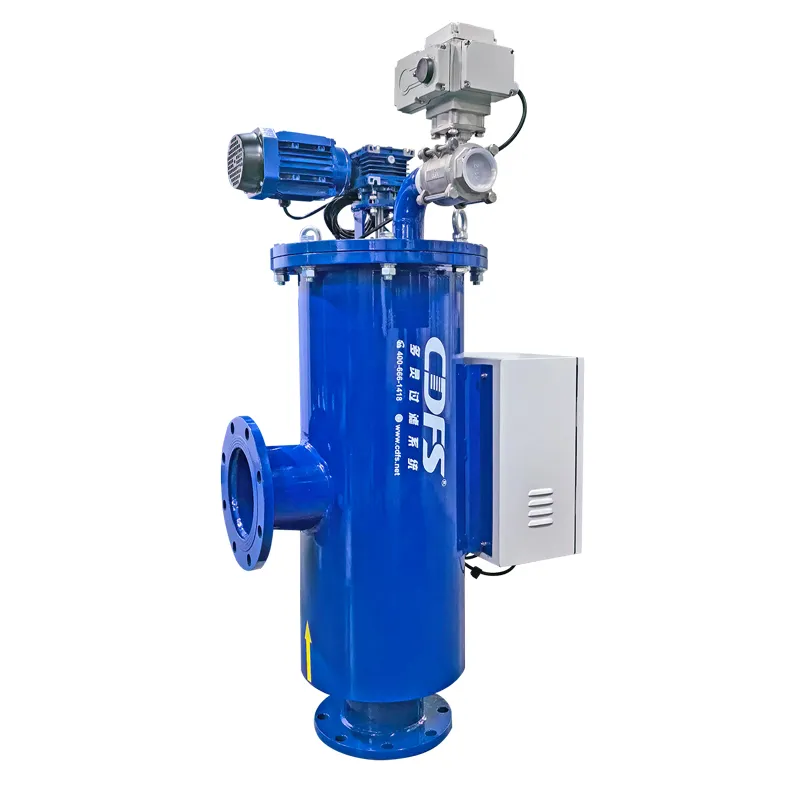
Comparing a disc filter to a sand media filter requires examining different variables. The primary considerations here are specific water quality requirements and the overall flow rate considerations of the facility.
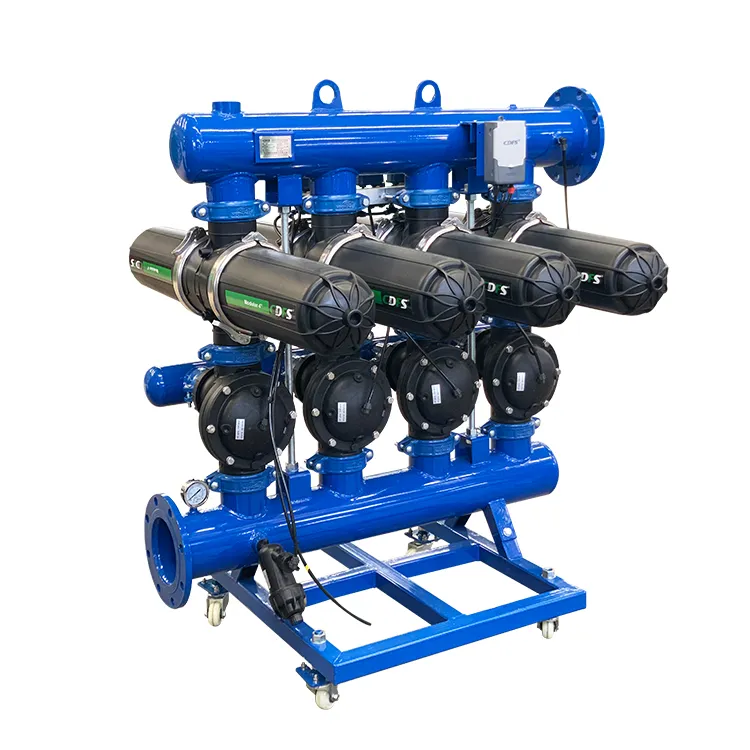
The choice between automatic and manual systems comes down to evaluating labor costs versus automation investment. A thorough long-term savings comparison almost always favors automated technologies in industrial settings.
A smart selection strategy must be based on both budget and application. Low-budget projects may require simpler, manual interventions. Large-scale industrial systems demand robust, continuous processing capabilities. Meanwhile, projects with high-precision filtration requirements will necessitate specialized media or advanced disc technologies.
Several crucial variables dictate the economic performance of your chosen system. The incoming water quality, specifically total suspended solids (TSS) and particle size, heavily impacts filter efficiency. System flow rate and pressure requirements also dictate the size and cost of the equipment. The automation level you select will directly influence operational costs. For international projects, local labor and energy costs are highly important factors to weigh. Finally, regional climate and environmental conditions can affect system longevity and maintenance needs.
Optimizing filtration economics in global projects starts with system design optimization. Right-sizing the equipment is critical. Engineers must avoid both overdesign, which inflates CAPEX, and underperformance, which cripples OPEX.
Using customization and modular solutions offers significant advantages. Modular designs provide the necessary flexibility for different industries and geographic regions.
A rigorous supplier selection strategy is vital. Buyers must decide whether partnering with a direct manufacturer or a trading company offers the best value. Do not underestimate the importance of robust technical support and responsive after-sales service.
Global projects require careful logistics and installation considerations. Shipping costs can heavily impact the final budget. Furthermore, selecting equipment noted for its ease of installation and commissioning will save valuable time and contractor fees.
The future of water management points directly toward smart filtration and enhanced economic efficiency. We are seeing rapid integration with IoT platforms and remote monitoring capabilities. This connectivity enables predictive maintenance, allowing operators to service equipment right before a failure occurs. The market is also demanding more energy-efficient filtration technologies. Above all, there is an increasing importance placed on water reuse across global markets as scarcity becomes a pressing issue.
In conclusion, plant managers must begin turning filtration into a strategic investment. Viewing filtration as a long-term cost-saving solution fundamentally changes how projects are budgeted and executed. The importance of choosing the exact right system for each unique application cannot be overstated. The final takeaway is clear: the cheapest upfront system is rarely the most economical choice over its operational lifespan.
Are you ready to optimize your facility's water management? We invite readers to reach out and request expert system selection advice tailored to your site. Our team can provide dedicated ROI calculation support to justify your upgrade , and we specialize in designing customized filtration solutions. With extensive export experience , we deliver project-based solutions and offer ongoing technical consultation availability for our global partners. Contact us today to transform your water filtration from a cost center into a reliable profit driver.
A screen filter uses a physical mesh to trap particles on its surface, making it ideal for basic mechanical filtration. A disc filter uses stacked, grooved discs to trap particles throughout the depth of the stack, offering higher precision and better depth filtration for finer contaminants.
A2: While the initial capital expenditure (CAPEX) is higher, an automatic self-cleaning filter system significantly reduces operational expenditures (OPEX). It eliminates the need for manual labor during cleaning cycles, prevents system downtime, and maintains consistent water pressure, which reduces the energy consumption of your pumps.
To calculate an accurate ROI, you must look beyond the initial purchase price. Factor in energy consumption, the cost of backwash water loss, routine maintenance labor, replacement parts, and the financial impact of avoided production downtime.
Yes. By effectively filtering and recycling process water, these systems drastically reduce your facility's reliance on fresh water intake and minimize the volume of contaminated wastewater discharged into local environments, helping you meet strict compliance standards.
Right-sizing ensures you do not overspend on a system that is too large (wasting CAPEX) or install a system that is too small, which would lead to underperformance, frequent clogging, and high maintenance costs (wasting OPEX). Proper sizing is especially critical in international projects where logistics, shipping, and local energy costs heavily influence the budget.



 EN
EN
 FR
FR
 NL
NL
 RU
RU
 AR
AR
 VI
VI
 LO
LO
 RO
RO
 TH
TH
 MY
MY
 MS
MS
 PT
PT
 ES
ES
 KO
KO
 BE
BE
 JA
JA
 FIL
FIL
 KA
KA
 DE
DE
 IT
IT

